


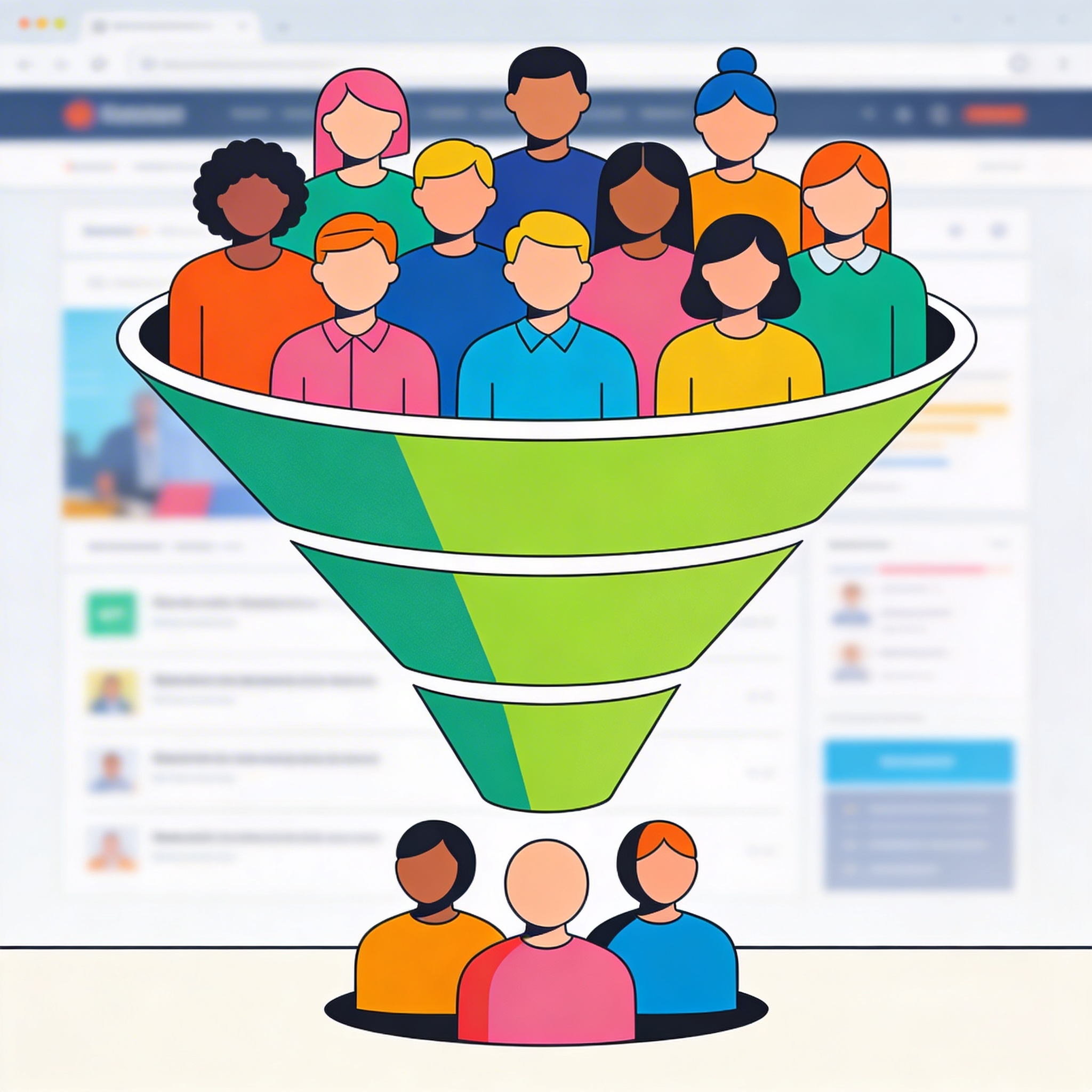
More website traffic feels like progress. But traffic conversion is what turns visits into value.
Sessions increase. Rankings improve. Impressions climb. Reports look impressive.
But here’s the uncomfortable truth many businesses eventually face:
Traffic to your website means nothing if it doesn’t convert.
You can invest in SEO. You can scale paid advertising. You can build brand awareness. You can accelerate lead generation but if visitors land on your site and leave without taking action, growth stalls.
Traffic creates opportunity. Conversion creates results. Measured by an improving conversion rate.
And confusing the two is one of the most expensive digital strategy mistakes a company can make.
Summary
Traffic creates opportunity, but only conversion creates results, so fix conversion leaks before scaling acquisition or lead generation. Effective conversion optimization is a cohesive system that aligns intent, messaging, UX/performance, funnel elements, and clear CTAs to reduce friction and build trust. Use analytics, heatmaps, and behavioral data to locate post-click bottlenecks and strengthen the mid-funnel where decisions are made.
Sustainable growth blends traffic with conversion into one cohesive strategy; if doubling traffic wouldn’t double revenue, the issue is the experience—optimize for stronger traffic conversion and a healthier conversion rate.
Website traffic vs. conversion: understanding the difference
In digital marketing, traffic is easy to measure. That’s why it often becomes the focus.
More visitors feels like momentum. But momentum toward what? Toward a higher conversion rate, not just top-line lead generation.
If your website isn’t structured to guide decisions, increased traffic doesn’t solve the problem, it amplifies it.
Imagine doubling your ad spend and sending thousands of additional users to a page that:
- Doesn’t clearly explain what you offer
- Hides pricing or next steps
- Lacks strong calls to action
- Loads slowly
- Feels visually cluttered
More traffic won’t fix that. It will simply increase bounce rates.
When conversion is weak, scaling traffic is like pouring more water into a leaking bucket.
The smarter move? Fix the bucket first, so lead generation efforts actually pay off.
What happens after the click matters most
The most important part of your digital growth strategy begins after someone clicks.
When a visitor lands on your website, they evaluate it in seconds. Subconsciously, they’re asking:
Do I understand what this company does?
Is this relevant to me?
Can I trust them?
What do I do next?
If those answers aren’t immediate and obvious, hesitation begins.
And hesitation kills conversion.
This is where many businesses lose potential customers and not because their traffic strategy failed, but because their website experience did, weakening traffic conversion.
Clicks are not the goal. Decisions are.
Why websites fail to convert (even with strong traffic)
Most conversion problems aren’t dramatic. They are structural.
Often, it’s not about “bad marketing.” It’s about friction.
The value proposition isn’t clear above the fold.
The conversion funnel has too many steps.
Trust indicators are buried instead of highlighted.
Navigation requires effort instead of flow.
Users rarely leave because they weren’t interested. They leave because the experience required work.
And online, effort equals exit.
This is why conversion optimization isn’t a design tweak, it’s a performance strategy that bridges lead generation and revenue.
The traffic trap: why more visitors don’t equal more revenue
High website traffic can mask deeper performance issues.
If you’re bringing in thousands of visitors, even a weak conversion rate will generate some results. That creates the illusion that everything is working.
But consider this:
If your conversion rate improved from 1% to 3%, the revenue impact could exceed doubling your traffic entirely.
The difference between 1% and 3% isn’t minor. It’s transformational.
Yet many businesses continue investing heavily in traffic acquisition before addressing website performance and conversion rate optimization.
The order should be reversed.
Conversion Optimization is a system, not a button color
Conversion optimization is often misunderstood as A/B testing headlines or changing button colors.
In reality, it’s about building a cohesive system.
Your messaging must match search intent.
Your landing page optimization must align with user expectations.
Your structure must support decision-making.
Your calls to action must meet users where they are in their journey.
When these elements work together, visitors move forward naturally.
When they don’t, friction builds.
For example, someone searching for “prefab tiny homes for sale” isn’t browsing casually. They have buying intent.
If they land on a broad informational page that talks about innovation and vision but doesn’t show pricing, models, availability, or next steps, they leave.
Not because they lost interest.
But because the page didn’t match their intent.
Intent alignment is one of the strongest drivers of improved conversion rates.
The conversion funnel: where growth actually happens
Many companies focus heavily on top-of-funnel visibility.
Fewer invest in strengthening the middle of the funnel where decisions are made.
The conversion funnel is where trust is built. Where objections are addressed. Where credibility is reinforced.
This is where:
- Testimonials validate claims
- Case studies demonstrate proof
- Clear pricing frameworks reduce uncertainty
- Process explanations remove fear
When users feel confident, they act.
When they feel uncertain, they hesitat, and hesitation often means lost revenue.
Optimizing the conversion funnel is not optional for sustainable digital growth.
It’s foundational.
User experience and website performance drive conversions
User experience is not cosmetic. It’s structural.
Design should guide attention, reduce cognitive load, and make next steps obvious. Clean hierarchy, proper spacing, and visual clarity all influence behavior.
Website performance also plays a critical role. Slow load times increase abandonment rates. Poor mobile responsiveness damages trust. Confusing navigation breaks momentum which in turn lowers your conversion rate.
These issues don’t always show up in traffic reports but they show up in revenue reports.
Improving user experience is one of the most effective ways to improve conversion rates without increasing traffic.
This is often where performance-focused website audits uncover opportunity: not by chasing more visibility, but by refining the experience users already have.
Data reveals conversion bottlenecks
If you’re unsure whether the issue is traffic or conversion, your analytics already hold the answer.
High impressions but low engagement?
Strong rankings but weak form submissions?
Consistent traffic growth but stagnant revenue?
These are classic indicators of conversion friction, and of weak traffic conversion.
Tools like heatmaps and session recordings reveal behavior patterns that standard analytics miss. Users hover over non-clickable elements. Scroll halfway. Abandon forms. Backtrack repeatedly.
They’re trying to move forward. The site simply isn’t helping them do it.
Data-driven conversion optimization turns insight into action.
Sustainable digital growth requires both traffic and conversion
None of this means traffic doesn’t matter.
Traffic is essential. Visibility is critical. Search presence drives opportunity.
But traffic alone is not a digital growth strategy.
When website traffic and conversion optimization work together, growth becomes scalable.
When they operate separately, marketing efforts fragment.
The strongest digital strategies align SEO, paid media, user experience, and conversion funnel design into one cohesive system tightly connecting lead generation to outcomes.
That’s where performance compounds.
That’s where ROI stabilizes.
That’s where brands move from chasing traffic to owning outcomes.
Final thought: if traffic doubled tomorrow, would revenue?
Here’s a simple question every business should ask:
If your website traffic doubled tomorrow, would your revenue double too? If traffic doubled but your conversion rate didn’t improve, the outcome would likely disappoint.
If the answer is no, the opportunity isn’t at the top of the funnel.
It’s in the experience.
Because traffic is visibility.
Conversion is performance.
And performance is what builds sustainable growth.